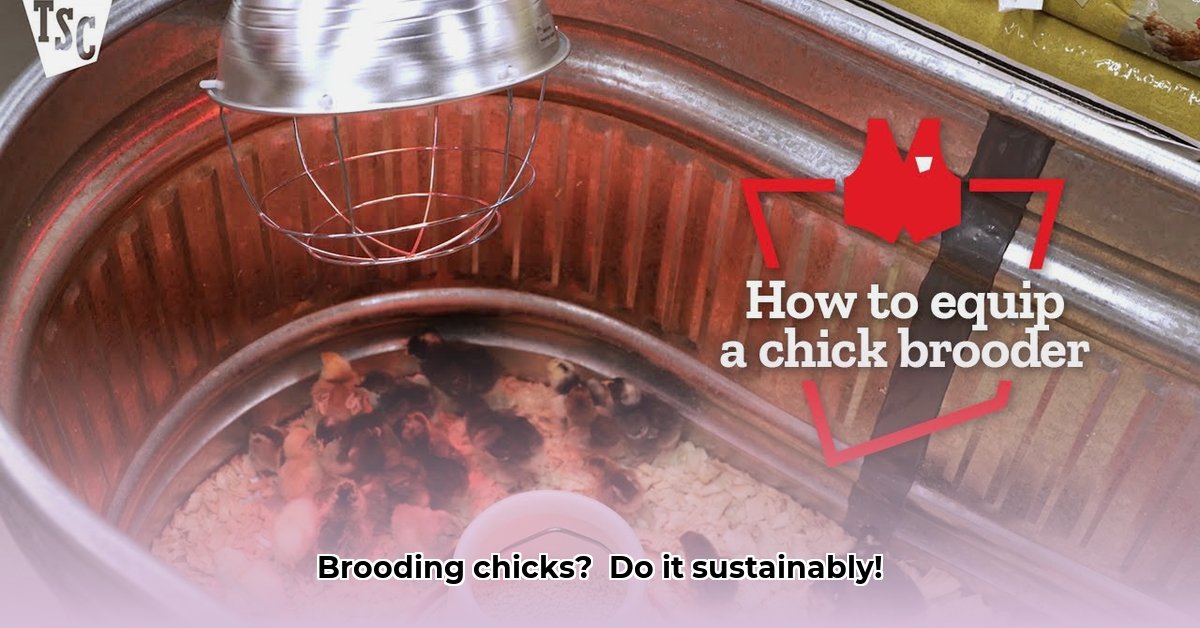
Raising chicks successfully requires providing consistent warmth and a safe environment. Tractor Supply brooder lamps offer a readily available and affordable solution, but choosing the right lamp and employing efficient practices are crucial for both your chicks' health and your energy bill. This guide will help you set up a sustainable brooding system, maximizing efficiency while minimizing environmental impact. To learn more about chick costs, check out chick prices at Tractor Supply.
Understanding the Essentials of Chick Brooding
Successful chick brooding centers around maintaining the right temperature, humidity, and hygiene. Chicks need warmth to thrive during their first few weeks, but excessive heat can be just as harmful as insufficient warmth. Think of it like Goldilocks and the Three Bears—you need to find the just right temperature. Additionally, a clean environment is paramount to prevent disease outbreaks. A well-designed brooding system addresses all these factors.
Setting Up Your Tractor Supply Brooder Lamp: A Step-by-Step Guide
Here's how to properly set up your Tractor Supply brooder lamp for optimal chick health and energy efficiency:
Choose the Right Location: Select a draft-free area, shielded from direct sunlight and away from moisture sources. Good ventilation is key to preventing ammonia buildup from chick droppings.
Assemble Your Brooder: Follow the manufacturer's instructions carefully. Ensure all connections are secure and the setup is stable to avoid safety hazards.
Strategic Lamp Placement: Hang the lamp at the appropriate height to maintain the correct temperature (around 95°F (35°C) for the first week, gradually decreasing). Use a thermometer to monitor the temperature accurately. Create a temperature gradient with a warmer area directly under the lamp and a cooler area further away, allowing chicks to self-regulate their temperature.
Bedding Selection: Use absorbent, dust-free bedding like pine shavings or recycled paper. Easy-to-clean bedding simplifies regular maintenance.
Temperature Regulation: Monitor the temperature closely during the first few days. Adjust the lamp's height to maintain the ideal temperature range. Remember, consistent monitoring is key to preventing both overheating and chilling.
Maintaining a Healthy Brooder Environment
Regular cleaning is crucial to prevent the buildup of ammonia from chick droppings, which can cause respiratory problems. Remove droppings daily. Inspect the lamp regularly for any signs of wear or damage. A malfunctioning lamp could lead to a drastic temperature drop, putting your chicks at risk.
Comparing Tractor Supply Brooder Lamps: Advantages and Disadvantages
Tractor Supply offers a range of brooder lamps. Consider these factors when making your choice:
| Feature | Advantages | Disadvantages |
|---|---|---|
| Cost | Affordable and widely available. | Ongoing electricity costs. |
| Ease of Use | Simple setup and operation. | Requires diligent temperature monitoring and presents a fire risk. |
| Availability | Easily accessible, both in-store and online. | Quality can vary between models. |
| Energy Efficiency | Relatively efficient compared to other electric heating systems. | Still relies on electricity and isn't the most eco-friendly option. |
Sustainable Brooding Alternatives: Beyond the Traditional Lamp
While Tractor Supply brooder lamps are convenient, consider more environmentally friendly alternatives:
- Improved Insulation: A well-insulated brooder box minimizes heat loss, reducing the energy needed from your heat source.
- Passive Solar Heating: In sunny climates, utilize passive solar heat to supplement your lamp, reducing electricity consumption.
- Red Heat Lamps: These emit less visible light, potentially reducing stress on your chicks.
Optimizing Brooding Practices for Maximum Efficiency
Efficient brooding goes beyond just the heat source.
- Proper Ventilation: Ensure adequate airflow to prevent ammonia buildup without creating drafts that chill the chicks.
- Brooder Design: A well-designed brooder minimizes heat loss, improving energy efficiency.
- Careful Monitoring: Regular temperature checks prevent both overheating and energy waste.
Conclusion: A Sustainable Approach to Chick Brooding
Choosing the right brooding system requires careful consideration. While Tractor Supply brooder lamps provide a readily available and affordable option, exploring sustainable alternatives and optimizing your brooding practices will benefit both your chicks and the environment. Consistent monitoring and implementing best practices ensure your chicks' well-being while minimizing your environmental impact. Remember to consult reputable poultry farming resources for additional information and best practices.